

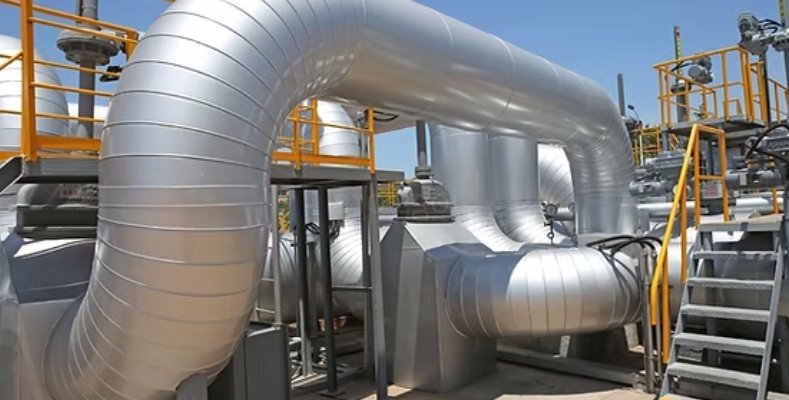
COLD INSULATION
Primary objective of thermal insulation is to conserve energy, maintain required process temperatures, and prevent condensation, thereby reducing overall operating costs of any system.
In cold insulation applications, when the ambient temperature is higher than the surface temperature, moisture present in the air tends to condense on the surface. To prevent condensation, the surface must be insulated using suitable insulation material of adequate thickness and protected with an effective vapor barrier.
An improperly designed insulation system can lead to significant energy losses, reduced service life and performance, corrosion of pipes, vessels, and fittings beneath the insulation, and moisture-related damage to equipment and machinery.
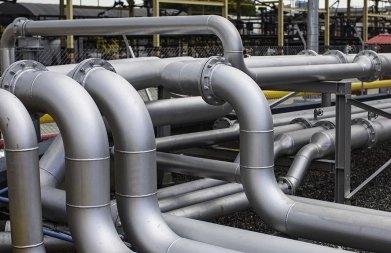
Factors Influencing Cold Insulation Performance:
- Atmospheric Humidity
- Surrounding (Ambient) Temperature
- Operating / Design Temperature
- Insulation Material Composition
- Thermal Conductivity of Material
- Water Vapor Transmission through Insulation
- Surface Emissivity Characteristics
- Dew Point of Surrounding Air
Cold Insulation Materials :
- Expanded Polystyrene (EPS) Insulation – Lightweight thermocol insulation widely used for chilled water lines, tanks, and cold storage applications.
- Polyurethane Foam (PUF) / Polyisocyanurate (PIR) Insulation – High-performance rigid foam insulation with low thermal conductivity, ideal for refrigeration piping, LNG systems, and cryogenic insulation.
- Cross-Linked Polyethylene (XLPE) Insulation – Closed-cell polyethylene insulation offering excellent moisture resistance and durability for HVAC and chilled water pipelines.
- CElastomeric Rubber Insulation (NBR / EPDM) – Flexible closed-cell rubber insulation designed to prevent condensation on air-conditioning ducts, refrigeration lines, and chilled water systems.
- Perlite Rigid Insulation – Inorganic insulation suitable for both hot and cold applications, commonly used in storage tanks and low-temperature industrial equipment.
- Fiberglass Wool Insulation – Cost-effective thermal insulation used in HVAC ducts and piping for both hot and cold temperature control.