

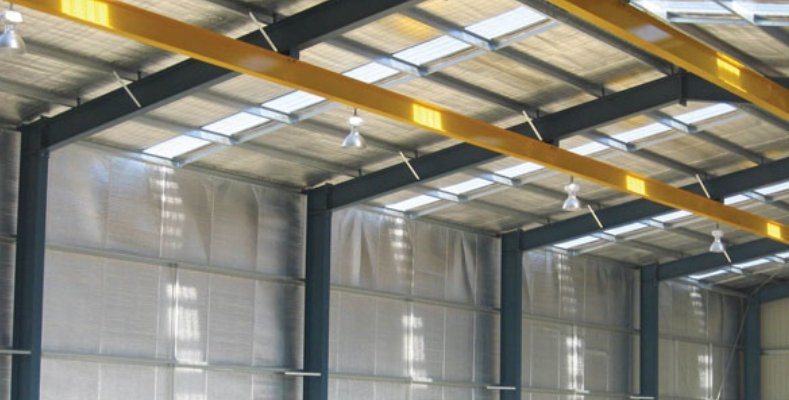
Acoustic insulation
Roof insulation is just as critical as the external roofing material itself. Proper insulation plays a key role in extending the lifespan of the roofing system and has been used for generations. While insulation materials and technologies have evolved over time, their core function remains unchanged — retaining heat when required and preventing heat gain when not.
Insulating the roof underside (underdeck) of a building helps maintain a stable indoor temperature, resulting in significant energy savings year after year. By reducing the demand on heating and cooling systems, insulation lowers energy consumption, cuts operating costs, and contributes to environmental protection by reducing the building’s carbon footprint.
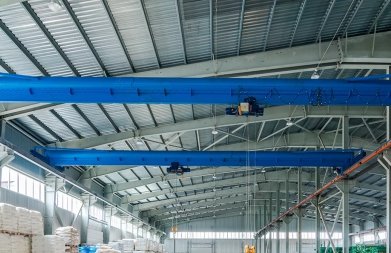
Areas of Application
- Beneath metal roofing sheets
- Insulation within sandwich panels between metal sheets
- Below RCC (reinforced concrete) slabs
Roof Insulation Materials
- Fiberglass blankets and boards
- Rockwool rolls for building insulation
- Thermocol (EPS) insulation
- XLPE insulation sheets
- PUF (polyurethane foam) insulation
- Rockwool slab insulation
- Thermal isolation boards
- Nitrile rubber insulation
Advantages of Roof Insulation
- Energy Efficiency: Thermal insulation limits heat transfer between indoor and outdoor environments, reducing the energy required to maintain comfortable room temperatures.
- RYear-Round Comfort: By minimizing heat gain and loss, insulated spaces stay cooler in summer and warmer in winter compared to external conditions.
- Reduced Thermal Stress: Insulation lowers temperature fluctuations on roof decks, helping prevent cracks and structural stress caused by thermal expansion and contraction.
- Lightweight System: Over-deck insulation materials are significantly lighter than traditional brickbat coba or concrete layers, decreasing dead load on the roof slab.
- Eco-Friendly & Non-Toxic: Insulation materials are safe, non-hazardous, and environmentally responsible.
- Lower Operating Costs: Energy savings lead to reduced air-conditioning running expenses and potential downsizing of HVAC equipment capacity.
- No Heat Absorption: Insulated roofs minimize heat buildup and subsequent heat radiation into interior spaces.